
By Reed Oliver
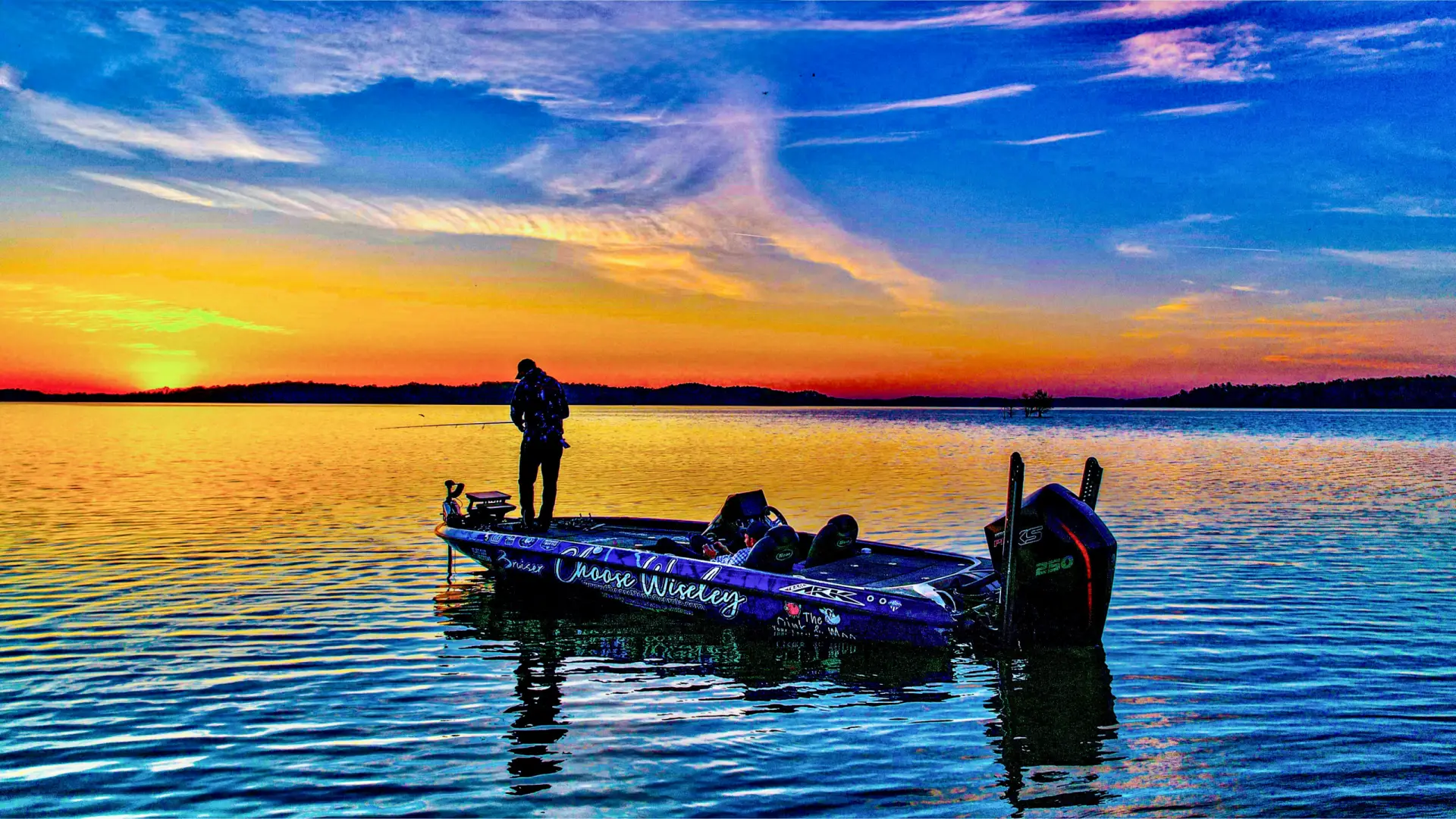
LAKE HARTWELL — Major League Fishing’s Bass Pro Tour brought 51 elite professional anglers to Lake Hartwell for Stage 2 from Feb. 19–22, competing for a $125,000 top prize and a $600,000 total purse. When the Championship Round ended on Feb. 22, Takahiro Omori of Tokyo, Japan, won with 12 scorable bass for 36 pounds, 6 ounces, defeating Jacob Walker (12 for 33-12) by 2 pounds, 10 ounces.
Local readers often ask the same question whenever Major League Fishing comes to town: What makes MLF different? Three features define it—scoring, conservation, and real-time pressure.
Every fish counts.
“Traditional bass fishing tournaments are a five-fish limit,” said Charity Muehlenweg, PR director for Major League Fishing. “The Bass Pro Tour is different—every fish counts.”
On Hartwell, there was a two-pound minimum.
“Our fisheries management division surveys the lakes, looks at the bass population and size, and sets what we feel is a good minimum weight for each fishery,” Muehlenweg said. “For Lake Hartwell, that’s a two-pound minimum.”
Fish are weighed and released immediately.
Instead of transporting fish for an end-of-day weigh-in, each competitor has an official in the boat who weighs qualifying bass as soon as they’re landed and releases them back into the lake.
“There’s a competition official on each boat,” Muehlenweg said. “The fish are weighed as they’re caught and immediately released right back into the habitat. Conservation is a huge part of what we do.”
The leaderboard is live.
Every fish posts instantly to ScoreTracker, a real-time leaderboard visible online and to anglers while they are still fishing.
“Each bass that’s weighed goes immediately into ScoreTracker, our live leaderboard,” Muehlenweg said. “Fans can see it in real time.”
That affects behavior because competitors can’t guess where they stand—they can see it.
“They all know the score,” she said. “They know when someone just bumped them out of first place or below the cut line.”
The structure amplifies the intensity: three timed periods per day and multiple rounds where weights reset, forcing anglers to deliver repeatedly.
“The weights reset… it’s almost like they’re fishing three different tournaments this week,” Muehlenweg said. “You have to do well every single time.”
Omori did. He surged early, then delivered the win in the finale.
His victory also carried a modern wrinkle. Under 2026 rules, forward-facing and/or 360-degree sonar is limited to one declared period each day, forcing tactical decisions about electronics. Omori’s Hartwell week stood out because he didn’t rely on forward-facing sonar to close the deal—a reminder that even in a live-scored era, fundamentals still matter.
Hartwell produced, too. The Top 10 combined for 85 scorable bass weighing 235 pounds, 11 ounces, and Jesse Wiggins earned Big Bass honors with a 5-pound, 2-ounce largemouth.