
This article is a continuation of the article ‘Lake Hartwell’s New Level Restrictions – What Lake Residents Need to Know‘ we posted a week ago.
Low water is changing the way many Lake Hartwell homeowners use their docks. In some coves, floating docks are resting partly or completely on exposed lakebed, leaving owners wondering how to reach the water and what they can do while levels remain low.
Homeowners should also prepare for lower water to remain an issue, as all three reservoirs remain in Drought Trigger Level 2, with current water release restrictions set to a maximum of 3,800 cubic feet per second (CFS). If still in drought level 2 at the beginning of November, the releases will be lowered to 3,600 cfs.
The U.S. Army Corps of Engineers’ current 10-week projection shows Hartwell around 649 feet in early October, with levels projected to decline further as we enter into November. However, the levels could possibly begin to rise in December if the Super El Nino brings an anticipated increase in rain during late fall and spring.
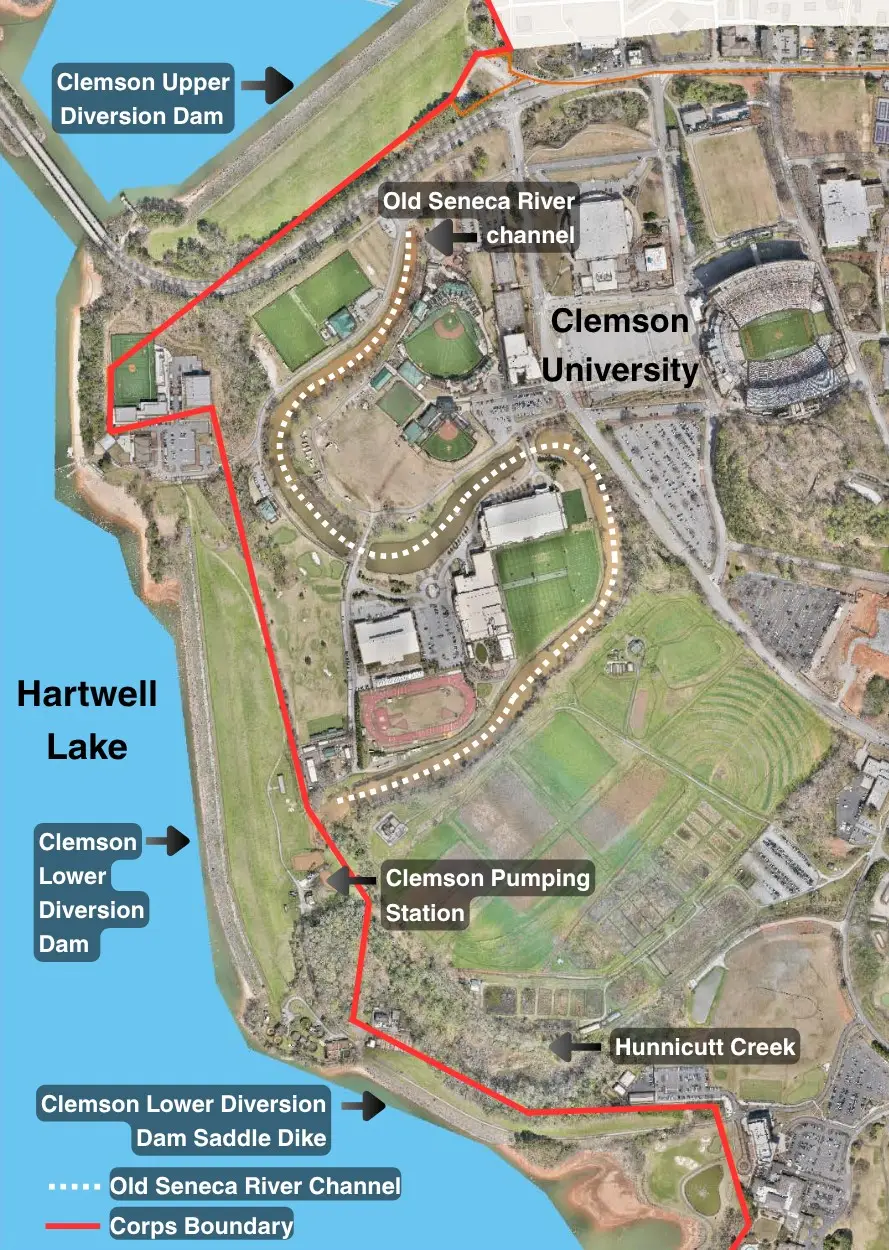
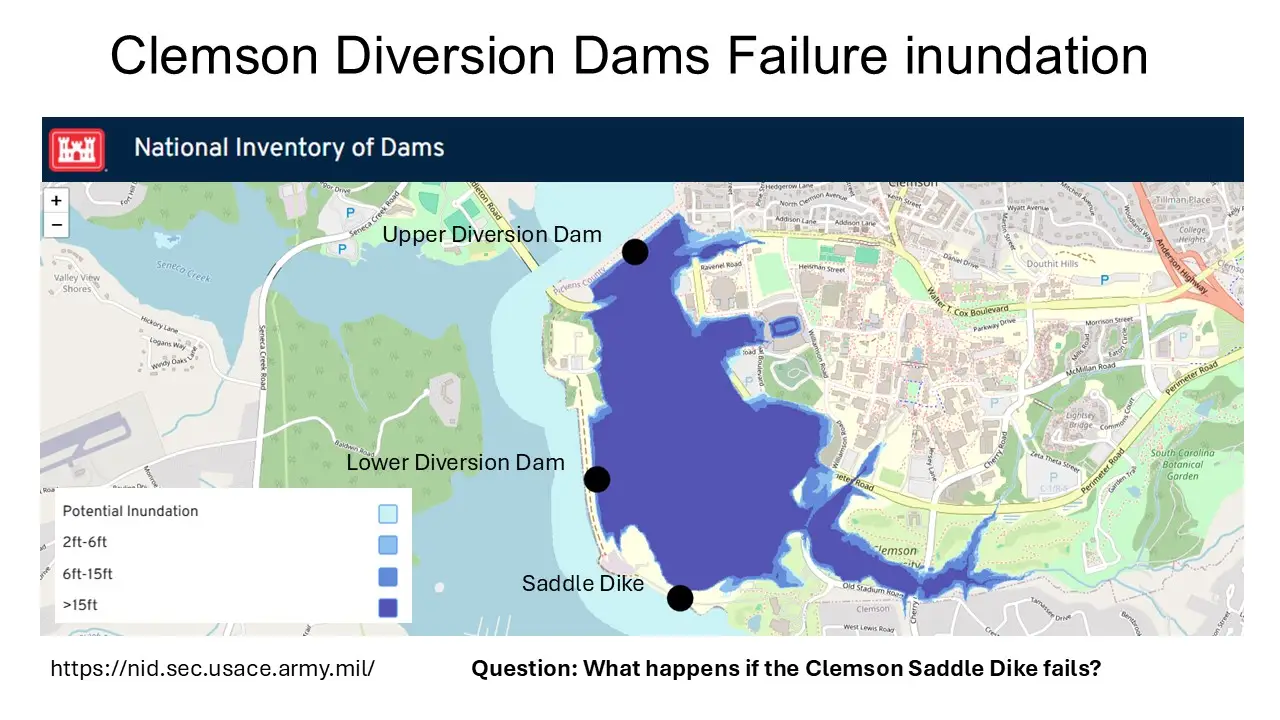
Even after drought conditions improve, the Corps has announced a temporary year-round target of 656 feet, which is the typical winter full pool level, but four feet below the traditional summer full-pool elevation of 660 feet, because of safety concerns involving the Clemson Lower Diversion Dam Saddle Dike.
During low-water periods, Hartwell’s Shoreline Management Plan allows dock owners to temporarily move their docks farther out to keep them afloat, provided the move does not obstruct access to existing docks or coves and does not create safety hazards. When water levels return, docks must be returned to their permitted locations and temporary anchor pins removed.
A gangway wheel or rolling system may make moving a dock easier as the shoreline changes. Before adding wheels, extending a gangway, or modifying anchoring systems, talk with your Corps shoreline ranger to make sure the changes are allowed under your permit. Dock and gangway modifications may require approval.
When a dock is sitting hundreds of feet from usable water, digging a channel may seem like an obvious solution—but homeowners should not begin trenching or dredging on their own.
The Corps may approve dredging to remove accumulated silt, particularly when low water allows equipment to access the lake bed. However, an application and approval are required before work begins. Dredging below the lake’s original contour into hardpan simply to create deeper private water is not authorized.
Low water can actually be a good time to have a shoreline evaluated for a dredging permit if years of sediment buildup are contributing to the problem.
If moving the dock is impractical, trailering the boat to an open public ramp may be the easiest way to continue boating. The Corps maintains an updated current list of ramp openings and closures on their website, and many Hartwell ramps remain usable even at today’s lower elevations. Currently, 80% of Corps-operated boat ramps are usable at 649 feet. However, it’s important to know, at the new full pool level of 656 feet, 97 % of Corps-operated boat ramps remain open and usable. Boaters should always check conditions before heading out and be vigilant about watching your depth-finder, navigate slowly in unfamiliar areas, and always wear a life jacket.
A stranded dock does not necessarily have to sit unused. If it is structurally stable and safely accessible, homeowners can still use the area for relaxing, watching wildlife, or enjoying the shoreline. Low water also offers a rare opportunity to inspect floats, cables, anchor points, decking and other components that are normally underwater or difficult to reach.
The most important rule is to ask before you dig, move or modify. Every Lake Hartwell property is different, and permitted activities depend on shoreline location and existing permits. The Hartwell Project Office can connect homeowners with their shoreline ranger before work begins.
Low water may change how homeowners enjoy Lake Hartwell, but it does not have to end lake season. With careful dock adjustments, approved shoreline work, public ramp access, and a little flexibility, residents can continue enjoying the lake while preparing their property for the day the water returns.
For boat ramp status, visit https://www.sas.usace.army.mil/About/Divisions-and-Offices/Operations-Division/Hartwell-Dam-and-Lake/Plan-A-Visit/Boating/Status-of-Corps-Boat-Ramps/.
For information about shoreline management, visit https://www.sas.usace.army.mil/About/Divisions-and-Offices/Operations-Division/Hartwell-Dam-and-Lake/Shoreline-Management/
To learn more about the Hartwell Lake level restriction associated with the Clemson Lower Diversion Dam Saddle Dike seepage issues, visit https://www.sas.usace.army.mil/Missions/Hartwell-Dam-and-Lake/Hartwell-Lake-Level-Restrictions/
For questions about the Hartwell Lake level restriction due to the Clemson Saddle Dike seepage, email cesas-hartwellpoolrestriction@usace.army.mil.
The Hartwell Lake Project Office is located at 5625 Anderson Highway, Hartwell, Ga. You can reach out to them for more shoreline management guidance at 706-856-0300 or toll free at 888-893-0678 or by emailing sas.cesas-op-h@usace.army.mil.
To view the Drought Management Plan, check current lake levels, see the 10-week projection and other reports, visit the Water Management web page at https://water.usace.army.mil/office/sas/reports/SAS/ResSummary.